
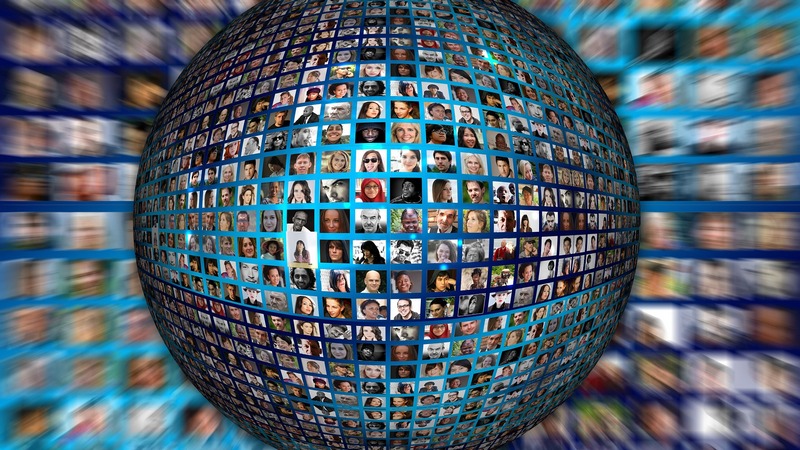
From a recent study which we have carried out at the Civil Empowerment & Rule of Law Support Initiative, CERLSI, we have found out that there are about 160 social media cites in operation today. The trendiest are Facebook, LinkedIn, Instagram, and Twitter. Even though the others relatively perform the same role as Facebook and twitter, they are not as popular because some are language and region specific. In non-English speaking countries like Russia, China, Belgium, Norway and Germany and France, some social media sites focus on using the medium to promote aspects of the language and culture and traditions of their peoples. Some region specific social media sites often have an English translation, and they try to entice you into signing up with them by generally doing everything that the more popular ones like Facebook and twitter do: some are for business, networking and academic incentives. The others, also in English, are different from Facebook and twitter and Instagram, in that they cater to the needs of a professional group, like LinkedIn. Others are date sites, race-specific sites and age specific sites.
Generally speaking, these sites perform one of the most significant roles of the digital age – they provide an opportunity to connect to the commonality of humanity in a way that convention or orthodoxy does not allow. Because of this, repressive and intolerant governments are often afraid of this ‘soft power’, and do everything to shut it down, ‘regulate’ or ‘sanitize’ it. We would recommend that you take some time after reading this to pick up Moises Naim’s The End of Power, and go straight page 12 and last paragraph. After going through that book, what you eventually come to terms with is that people in power generally fear whatever they assume will erode or undermine their political power and therefore they will want to ‘sanitize’ it. In the present circumstance in Nigeria, powerful people who often maintain their hold on power by keeping people in the dark suddenly feel threatened at the vista which social media give Nigerians to abuse their representatives not delivering on their election promises. Naim said that in spite of how the greatest revolutions of the millennium were instigated, propelled and driven by social media, ‘circumstances that motivated them to take to the streets are driven by circumstances at home and abroad that have nothing to do with the information tools at their disposal (page 13).
Just after the inception of Mr. Buhari’s second term, her shut the borders, sent a budget to the National Assembly, and made a couple of appointments like the new economic team, and the redeployment of several of the political appointees of his deputy. On the whole, these moves appeared to be a move to gain the trust of Nigerians that he was genuinely interested in moving Nigeria in a certain responsible direction. Then enter Mr. Lai Mohammed’s seeming counter move of ‘regulating’ and ‘sanitizing’ social media. According to the minister, all other countries had ‘regulated’ and ‘sanitized’ their social media and therefore, Nigeria must not be an exception. He also argued that comments on social media have had the tendency to brew hate, promote acrimony and fake news, and therefore in a new law to be enacted by the National Assembly, all social media sites were going to be ‘regulated’ and ‘sanitized’, and anyone in breach of the social media law would hang.
We are not sure how the Honourable Minister for Information and Culture Mr Lai Mohammed would set about ‘sanitizing’ and ‘regulating’ over 100 social media sites if Nigerians eventually take to some of them. Already, we have set forth our position, a position which identifies certain very serious issues like poverty and unemployment that this government must confront and outlaw. We will not be joining issues with those who have maintained that if the laws on Social media were to be there in 2012 and 2015, Mr Lai Mohammed would not be alive today. What we want to say in addition to our plea to the government to abandon the idea to ‘regulate’ and ‘sanitize’ social media the way other countries have ‘regulated’ and ‘sanitized’ theirs (according to the Minister), is that Nigerians would have no problems with ‘sanitizing’ social media if the government he represents lived up to its billing. Across board, wailers and hailers are feeling the short end of the stick – our economy is second to South Africa’s and our money is very weak. High profile politicians travel overseas to treat headache and the roads are as unmacadamized as ever.
As response to the position being canvassed by Nigerians on Mr Lai Mohammed’s proposed social media law, there have been uncoordinated tunes in and out of government. While there are news reports indicating that government is not going to go ahead with the Social media law because aspects of what the proposed social media law seeks to achieve were already being taken care of with the law on Cybercrime, others, ascribed to the Vice President indicate that the proposed media law is really unnecessary. Coming the way it is, there is an air of bewilderment that only an outright abdication of the plan to ‘sanitize’ social media. But no – there’s a defiant Mr. Lai Mohammed insisting that the law on social media ‘regulation’ and ‘sanitization’ must pass. Hear him: Finally, and for the avoidance of doubt, while we welcome robust debate on this issue, the criticisms in certain quarters will not stop us from going ahead with our efforts to sanitize the social media space. It is the right thing to do in the circumstances.”
Nigerians do not want this ‘regulation’, nor are they interested in the ‘sanitization’. What Nigerians want is for government to attend to the circumstances at home and abroad that promote hate speech, fake news and irresponsible journalism. Would Nigerians be peddling ‘hate speech’ if they have food on their tables and jobs that keep them engaged? Would Nigerians be writing ‘fake news’ if there are good roads, potable water and electricity? Nigerian seize this opportunity to recommend to Mr Lai Mohammed to withdraw all of those letters he said he has dispatched to ‘stakeholders’ – so-called representatives of the media, civil society, technology and security experts, online publishers, bloggers, relevant agencies of government – and focus on the proactive option of using digital technology to drive the programmes and projects of his principal. What would be wrong with developing a social media site of our own, wholly Nigerian, and catering to the development of our culture? The portfolio Mr Lai Mohammed holds says he is minister of information and culture. What is Mr Lai Mohammed doing to resuscitate our dead and dying libraries nationwide, our dying traditional institutions or sell our image through our cultural potentials abroad? All these are very serious issues that Mr Lai Mohammed should focus instead of trying to force a law down our necks. But by being this reactive to criticism of his social media law already suggests that there must be something awkward with his plan to ‘sanitize’ the medium, and sends a strong message that instead of sanity, there is going to be suppression and repression.
Apart from our earlier suggestion to Mr. Lai Mohammed to work hard at encouraging a friendly National Assembly to make laws to end poverty in Nigeria, we want to request Mr. Honourable Minister of Information and Culture to tune to a music channel on his tv. We are certain he would be embarrassed at the dozens of Nigerians promoting nudity as music and, helping to debase aspects antithetical to our culture and traditions. That area needs his attention more.
