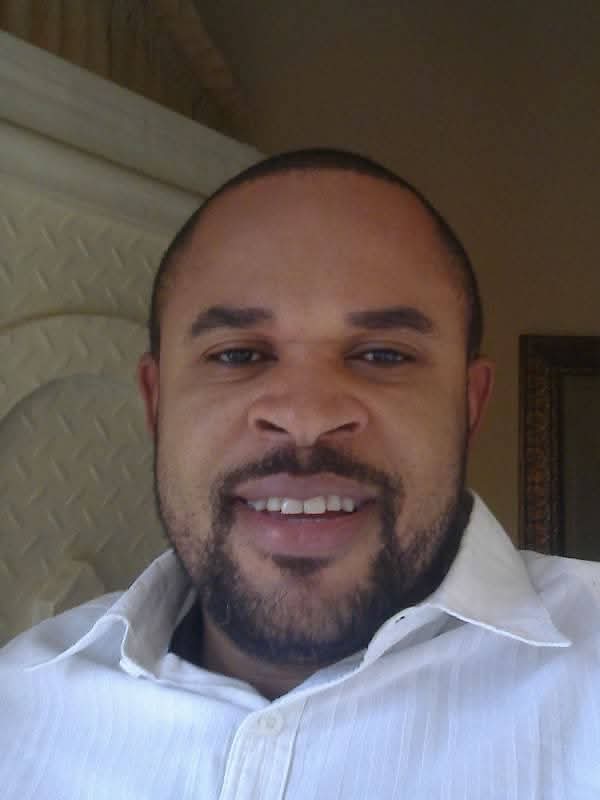
The continuing legal battle involving former Kaduna State Governor, Nasir
Ahmad El-Rufai, has become much larger than the fate of one politician. It
has developed into another uncomfortable test of Nigeria’s ability to
pursue accountability while protecting due process.
To his supporters, El-Rufai is being persecuted because he has fallen out
with the political establishment and become associated with opposition
efforts ahead of the 2027 elections. To the authorities, however, the
matter is straightforward: he is a defendant facing serious allegations of
financial misconduct and abuse of office and should answer them before the
courts.
The danger is that Nigerians may allow their personal feelings about
El-Rufai to determine which version they believe. That would be a mistake.
El-Rufai may be controversial. He may have made political enemies. He may
have governed Kaduna in ways that generated passionate supporters and
equally passionate critics. None of those things should determine whether
he receives justice.
THE ALLEGATIONS MUST BE TESTED, NOT ASSUMED
The Independent Corrupt Practices and Other Related Offences Commission,
ICPC, has brought multiple charges against the former governor. The
allegations include abuse of office, fraud, intent to commit fraud,
conferring undue advantage and financial impropriety, among other offences.
In April 2026, the ICPC said it had arraigned El-Rufai on an amended
nine-count charge before the Kaduna State High Court. In another proceeding before
the Federal High Court, he and other defendants faced an amended 11-count
charge involving alleged abuse of office, financial impropriety and money
laundering. El-Rufai has pleaded not guilty and maintains his innocence.
That distinction cannot be overstated.
Being charged with corruption is not the same thing as being convicted of
corruption. The prosecution has the burden of proving its case. El-Rufai
has the right to defend himself. And the court—not social media, political
parties, newspapers or cheering crowds—must ultimately determine whether
the allegations have been established.
BUT THE DETENTION HAS RAISED QUESTIONS
The controversy surrounding El-Rufai’s detention is partly understandable
because the legal proceedings have involved multiple applications, courts
and bail decisions.
The ICPC says El-Rufai’s custody is backed by a 5 March 2026 remand order
issued by a court and that the commission has been operating within the
framework of the Administration of Criminal Justice Act. The commission has
therefore rejected claims that it simply decided to keep him indefinitely
without judicial authority.
There has also been a significant development concerning bail.
On 14 April 2026, a Federal High Court granted El-Rufai bail in the sum
of ₦200 million, with conditions including two sureties—one being a
serving or retired civil servant of Grade Level 15 and another being a
recognised traditional ruler.
But proceedings in the Kaduna State High Court produced different outcomes.
The court subsequently rejected applications for bail, including a later
application based on medical grounds. On 29 June 2026, Justice Darius
Khobo rejected the latest medical-bail application after considering
arguments concerning El-Rufai’s alleged health condition and the medical
evidence presented by his lawyers.
The important point is therefore that the detention cannot accurately be
reduced to the claim that an anti-corruption agency is simply ignoring the
courts.
There are judicial decisions behind the continuing custody. That, however,
does not mean Nigerians should stop asking questions about the process.
IS POLITICS COMPLETELY ABSENT FROM THE EQUATION?
This is where the matter becomes more complicated. El-Rufai is not merely a
former governor facing criminal charges. He is an influential political
figure who has broken with the ruling political establishment and has been
associated with opposition realignment ahead of 2027.
That political background inevitably creates suspicion. The question is not
whether El-Rufai should be prosecuted because he is politically
inconvenient. The question is whether the same investigative standards
would have been applied if he remained firmly inside the ruling political
camp.
That is a legitimate democratic question. But it cuts both ways. Those
defending El-Rufai cannot simply declare that every allegation against him
is politically motivated. Equally, those celebrating his prosecution cannot
assume that an allegation becomes true merely because the accused is a
political opponent they dislike. The evidence must decide.
NIGERIANS HAVE SEEN THIS MOVIE BEFORE
Nigeria’s political history is littered with accusations that
anti-corruption investigations are selective.
Politicians in government often celebrate investigations involving their
opponents while describing investigations against themselves or their
allies as persecution. When power changes hands, the vocabulary
conveniently changes.
Yesterday’s persecuted politician becomes today’s prosecutor. Yesterday’s
corruption fighter becomes tomorrow’s alleged victim.
This cycle has weakened public confidence in institutions. And that is
perhaps more dangerous than the El-Rufai case itself. A functional
democracy cannot depend on whether Nigerians like the person being
investigated. The law must work for the popular and the unpopular, the
powerful and the powerless, the government and the opposition.
EL-RUFAI ALSO CANNOT CLAIM IMMUNITY
There is an uncomfortable truth his supporters must confront. A politician
does not become immune from investigation simply because he has become an
opposition figure.
If investigators have credible evidence that public resources were
misappropriated during his administration, Nigerians deserve to know what
happened. If contracts were irregularly awarded, the evidence should be
presented. If public money was diverted, those responsible should face the
consequences.
Former office holders cannot demand accountability when their opponents are
accused and then demand political immunity when the spotlight turns on them.
That would be hypocrisy. But the reverse is equally dangerous: government
cannot use the machinery of prosecution to settle political scores. That
would be persecution masquerading as accountability.
THE REAL TEST IS NOT EL-RUFAI
The real test is Nigeria’s institutions. Can the ICPC investigate a
powerful former governor without political interference? Can the courts
determine the case without intimidation Can the prosecution prove its
allegations beyond the required legal standard? Can the defence challenge
the evidence effectively? Can Nigerians accept a judicial outcome even when
it favours a politician they dislike? These are the questions that matter.
If El-Rufai is guilty, convict him. If the prosecution cannot establish
its case, acquit him. If he qualifies for bail under Nigerian law, grant
him bail. If the law permits continued detention under clearly established
judicial orders, let that process be transparent and subject to lawful
review. But don’t substitute political popularity for evidence.
AND THIS SHOULD CONCERN EVERY NIGERIAN
It is tempting to say: “Why should I care? It is El-Rufai.”
That is precisely the attitude that can make injustice politically
convenient.
Today, the accused may be a politician you dislike. Tomorrow, it may be the
politician you worship. Today, you may cheer because an opponent is being
detained. Tomorrow, someone may use the same machinery against your
political hero—or even against an ordinary citizen who has no political
connections.
Rights become meaningful only when they are protected for people we
disagree with.
That is why Nigerians should resist both extremes: blindly defending
El-Rufai because he is an opposition figure, and blindly supporting his
detention because they dislike him.
NIGERIA NEEDS ACCOUNTABILITY WITHOUT VENDETTA
There is nothing wrong with investigating former governors. In fact, a
serious democracy should be capable of examining the stewardship of every
public official, regardless of political affiliation.
But accountability must be predictable. The public should know what the
allegations are, what evidence supports them, what the defence says, what
the courts decide and why those decisions are made.
That is how institutions earn legitimacy. If the government genuinely
believes El-Rufai committed serious offences, it should prove the case in
court rather than allow the matter to become a political theatre.
And if the courts ultimately find that the allegations have not been
proved, the state must have the institutional maturity to accept the
verdict. That is the difference between rule of law and rule by power.
THE QUESTION NIGERIANS SHOULD BE ASKING
The issue is therefore not simply: “Do you like El-Rufai?” It is: “Would
you still demand due process if the person being detained were your
political enemy—and would you still demand accountability if the accused
were your political hero?”
Nigeria’s democracy will mature when the answer to both questions is yes.
Because ultimately, the fight should not be about saving El-Rufai or
destroying El-Rufai. It should be about building institutions strong
enough to ensure that neither El-Rufai nor any other Nigerian is above the
law – and neither is beneath it.
JUSTICE MUST NOT DEPEND ON WHO IS IN POWER, WHO IS BEING INVESTIGATED OR
WHO IS BEING CHEERED.
JUSTICE MUST SIMPLY BE JUSTICE.