
I don’t know what’s going through President-elect Muhammadu Buhari’s mind at the moment, but his job—daunting to begin with—just got tougher. Nigeria is beset by one of the worst fuel shortages in its history. And in a country where something as basic as refined fuel frequently becomes scarcer than gold, the current crisis is Olympian in scale. As if the paucity of fuel were not dismal enough, there’s little electric power in the space called Nigeria.
I had recently suggested that the incoming president’s mettle would be tested early by Nigerians’ high (I’d say excessive) expectations. Add to the pile of expectations the volatile issue of fuel scarcity and power blackout, and you have a recipe for real trouble.
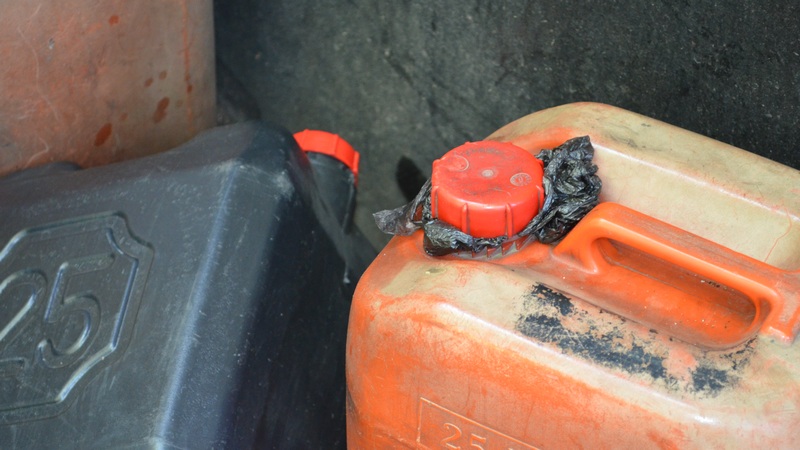
 All week, each call I placed to or received from Nigeria had the fuel shortage at its front and center. Each person described the direness of the situation, its unrivaled hardship. One relative said he had missed work numerous times. His car ran out of fuel nearly two weeks ago, and he was tired of carrying about jerry cans, searching for fuel. “Am I supposed to walk to work every day?” Several spoke about the closure of banks, businesses and hospitals. One caller, a company executive, spoke about the disruption of flights. “Aviation fuel for domestic airlines is becoming impossible to come by,” he said. He added: “The scene at the Abuja Airport is absolute chaos. When an airline has a flight, there’s a fierce scramble for it. In fact, you see people fighting for a seat on commercial flights as if they were jostling to get on a molue [bus].”
For rejected President Goodluck Jonathan, the mess is both ironic and an accentuation of his disastrous tenure. The irony lies in the fact that he began his presidential term by promising to make fuel scarcity a thing of the past—and seeming to make good on his word. Early in his Presidency, I had an interesting mini-debate with one of his hawkish fans. The man had written to scold me for a column that was critical of Mr. Jonathan. “He’s the best president Nigeria has ever had,” the man wrote, invoking a typical absurd argument. Then he spelt out the basis of his assessment. “Here in the [south] East, we used to have fuel scarcity all the time. But since Jonathan took over, we now have fuel everywhere.”
I wrote, in a testy response, that only a people with pathologically low expectations would declare somebody a champion president on such flimsy grounds. In other polities, where expectations are high, great leaders are measured, a, by their ability to ennoble citizens, b, to deepen or strengthen the sense of optimism and community, and, c, by policies that lead to jobs creation, the expansion of the middle class, and dramatic improvements in a variety of sectors, including infrastructure, education, healthcare.
Yet, if Mr. Jonathan became Nigeria’s “best president” because he supposedly fixed the fuel snafu, what does it mean that his presidency is ending on a note of one of the worst fuel crises in years? Is it a metaphor, then, of a promising presidency nurtured into abject failure?
Some of President Jonathan’s fans blame the fuel imbroglio on the APC’s irresponsible partisan rhetoric. They contend that fuel marketers, discouraged by the APC’s hostility to fuel subsidies, simply suspended imports, hence the current crisis.
Not true, APC folks declare. The root of the problem, they insist, is the criminal collusion between the Jonathan administration and fuel marketers to use fuel subsidies as a ruse to launder funds. According to the APC’s narrative, in preparation for the 2015 elections, the PDP and the Presidency permitted fuel marketers to over-inflate their invoices. Much of the excess funds were then funneled into the PDP’s war chest.
For us, “ordinary” Nigerians, the only consolation is that the truth, sooner than later, will out. For now, however, Nigerians have a crisis on their hands. For another day or so, that crisis belongs to President Jonathan. From May 29, 2015, regardless of who or what caused it, the crisis becomes Mr. Buhari’s headache.
At the very least, the fuel crisis should remind the incoming president—in case he forgot—of the urgency of leadership. When Nigerians hailed Mr. Buhari as the answer, they implied—the answer to known and unknown, present and lurking problems. Nigeria is an idea founded on problems. It is a problem that keeps giving. The president-elect better arrive in Aso Rock without any illusions. He better insist on hiring the best, trustworthy, tested hands out there. He better buckle up, for it’s going to be a bumpy ride.
And how he handles the fuel crisis will go a long way to set the tone and terms of his relationship with Nigerians. Part of Mr. Jonathan’s deficits was not only his failure of statecraft. He was, also, an inept, delinquent communicator. His wretchedness as a communicator was writ large in the aftermath of the April 14, 2014 abduction of schoolgirls in Chibok, Borno State. First, a day after the tragedy (compounded by an earlier suicide bomb attack that killed scores at an Abuja bus station), Mr. Jonathan went dancing at a campaign event in Kano. It was one of the defining moments of levity in his presidency.
As a military ruler, Buhari was not exactly big on communication. But he must learn to speak to Nigerians, as frequently as the occasion demands, and as honestly as possible. Some supporters of his still believe that he has a magic wand, a sure-fire abracadabra that would erase the demon of corruption from the Nigerian space, jail all corrupt politicians (including those who financed his campaign), build new roads and rehabilitate the old ones, deliver regular, uninterrupted electric power, create millions of new jobs, revamp the educational sector and give Nigerians a robust healthcare system. He should be the first to dispel this superstition.
In the lingering fuel crisis, Mr. Buhari has a perfect challenge and opportunity. The challenge lies in proving himself as a true leader, a problem-solver. It won’t be enough to adopt an episodic approach to a problem that is awfully recurrent. Yes, he must find an answer for this current crippling crisis, but he ought to, also, show that he understands how to spare Nigeria the shame of being a major oil-producing country that often can’t find fuel.
The opportunity here is to take Nigerians into confidence about the factors that triggered this fuel shortage crisis. If—as we found out in 2012—oil marketers have continued to fleece Nigerians through illicit multiple-tripping schemes, Mr. Buhari should have the courage to expose it. And he should propose policies to stop the drain of public funds through fraudulent fuel subsidy claims—and to recover as much of the stash of stolen funds as possible.
Please follow me on twitter @ okeyndibe
